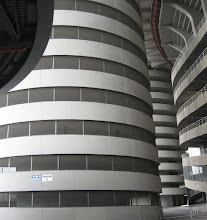
At the end of June, Italy held much anticipated "elections" for a new FIGC president, following the resignation of basically everyone when Italy failed to qualify for a third consecutive World Cup. But the outcome was basically known before the "election" was held. Despite power plays from both sides, people like Beppe Marotta backed Giovanni Malagó, and they already knew the majority of Serie A clubs and others backed him. This, in spite of the challenges to his very eligibility to serve as not even being a current member of the FIGC. One of the reports leading up to the election was that Malagó was planning to bring in Paolo Maldini as technical director. But that appointment ended almost as soon as it started, because Italy just cannot help itself. Did they even stop long enough to consider why Norway, a country with 1/10th of their population, destroyed them and won their group in qualifications this year? A country that had not been to the World Cup in 28 years. Perhaps this should have been a wakeup call to look at where Italy went wrong vs. what Norway is doing right.
 |
| Where Italy went wrong vs. what Norway is doing right, in one photo. |
Where Italy Went Wrong
Italy has gotten so many things wrong for so many years. But most recently, they had another chance to reboot, and failed spectacularly once again. In case you missed the Italy saga, Maldini took his time accepting the technical director position Malagó begged him to accept. In hindsight, his apprehension was clearly justified, because after interviewing (and being turned down by) both Carlo Ancelotti and begging Pep Guardiola to be the next manager of the Italian national team (and Guardiola nearly accepted,) his next choice was former Milan and Italy teammate, Andrea Pirlo. Pirlo unfortunately was not named Antonio Conte or Roberto Mancini, the two managers Malagó and his ancient men in power wanted to appoint to the bench. So someone dragged up some business connection Pirlo had to a Russian betting company.
 |
| Malagó actually told Maldini "This time I choose," so why did he ask Maldini at all? |
Scandal. Betting is a €165 billion per year market in Italy. Many of the companies that do business there are from foreign entities, including places like Russia. And yes, the FIGC does business with some of them. Not to mention the ties many of these men have to the mafia. Pirlo was definitely not alone in his ties to something both promoted by and shamed by the FIGC. This was just a way to try to shame Pirlo so they could avoid appointing him as the national team manager.
But what they may have forgotten was that Paolo Maldini is a man of principle. Not only did he stand by his friend, he refused to be just a posterboy for the FIGC. He wanted to affect real change in Italy and throughout the FIGC, including (and especially) to the youth system. Which I think is why he chose a manager like Pirlo, as well. And it was not only Pirlo. Maldini also submitted two other World Cup winners who are now managers: Daniele De Rossi, and Fabio Grosso. However, those two already had coaching positions in Serie A. Maldini, though, seeing as he was not going to actually be allowed to work, he resigned.
 |
| Italy will never qualify until they actually reform, restructure, and rebuild. |
This is a pattern for the FIGC. In 2010, after crashing out of the World Cup in the bottom of their group in the Group Stage, they had appointed Italian legend Roberto Baggio to be the technical director of the FIGC. He was asked to write up a report about how to improve the Italian football system. So he did. It was 900 pages long. Not only did the FIGC not implement it, they likely did not even read it. About a year later, he resigned, as he realized that he had not real authority and was not going to be heard. The following World Cup, in 2014, Italy again crashed out in the group stage, despite having won their fourth World Cup just eight years prior. They have not been to a World Cup since.
After losing Maldini, Malagó replaced him with 74 year-old Claudio Ranieri, simultaneously appointing his beloved Roberto Mancini as National Team manager again. You know, the guy that failed to get them to the World Cup in 2022? I disagree with people who make excuses for his failure. He called up players whose time was up, failing to call up important players in their prime, his line ups in qualifications were poor, and most of all, he did not trust his young players.
 |
| Failing to qualify in 2022? The obvious choice to fail to qualify for 2030. |
Like his predecessors, Mancini complained that Italy did not have any young talent. Yet this summer, Sandro Tonali transferred from Newcastle to Tottenham for a reported €108 million. Marco Palestra signed for Chelsea for €55 million, just to name a couple. They join a long list of Italian players in the Premier League, including Destiny Udogie, Riccardo Calafiori, Federico Chiesa, Wilfried Gnonto, as well as goalkeeper Gianluigi Donnarumma. And those are just a few of the players in England. Italy boasts plenty of talented young players in Serie A and elsewhere. The problem is stubborn managers and a system that does not put any faith in their young talent.
More Drama, Less Qualifying
But it got better. Malagó had not even bothered to register as a member of the FIGC before submitting his candidacy, but that was not a problem for him. When Mancini's Italy lost their first Nations League match, everyone wanted Malagó out. But after a big win, they all wanted him to stay again. How to let someone stay who was an illegitimate FIGC President? Luckily, CONI (Italian National Olympic Committee,) which Malagó had served on the executive board of since 2000, and had also served as President of, came up with the perfect Italian solution: they would go ahead and remove Malagó as President, but install him as Extraordinary Commissioner until another election could be held. (This, despite UEFA's warnings about a commissioner.)
 |
| Old and older. Italy's only choices. |
That obviously could not be the end of the drama, though. Instead of being re-elected unopposed, as he expected, the 67 year-old Malagó, whose sporting experience was in futsal, not football, has been challenged by 82 year-old Adriano Galliani. Because nothing says progress like electing an even older man to run the FIGC. Although, in his defense, at least Galliani has worked in football, even if football has long passed him by. I don't even have the patience to write all the drama that has ensued since Galliani entered the race, and he even admitted he would also keep Mancini, so what is even the point? But the new election to see how old the FIGC can get will be held on December 14th.
Meanwhile, in the Nations League, Italy failed to qualify for the next round after losing twice to Belgium and drawing with France, despite also beating Fance in Italy and two big wins vs. Türkiye in the Group Stage. Because if you keep doing the same things you've always done, you'll keep getting the same things you've always gotten. And for years now, for Italy, that is failure to qualify. Sure, this is just the Nations League, but there is no evidence whatsoever that anything has changed enough to see them qualify for the next World Cup.
 |
| Norway celebrate their 4-1 win over Italy at San Siro, clinching their World Cup spot. |
What Norway Is Doing Right
Using all of this as a backdrop, let's look at what a much smaller country did when they failed to qualify for a World Cup. 1998 was the last World Cup Norway had participated in. That year, they qualified for the Round of 16 for just the second time in their country's history. However, they were knocked out by... wait for it... Italy.
 |
| Eggen's defensive efforts were not enough as Italy knocked Norway out of the World Cup in 1998. |
Norway failed to qualify for six World Cups in a row, but during that time, they went back and completely rebuilt their entire football development system. To understand how a country could possibly agree and execute something like this, it is important to understand a social construct known as Janteloven. This idea is that no one person is greater than the community, which promotes a spirit of humility and working together for the common good. This idea removes ego and unites people with the idea of caring for one another, for all people, rather than focusing on what's in it for them or how something will benefit them or make them a star.
This same spirit drives Norway's sporting culture. Norway absolutely dominate the podium in the Winter Olympics, and they fare well in the Summer Olympics as well,. They also boast one of the top golfers in Viktor Hovland, Caspar Ruud is one of the top tennis players in the world, and there is also the female Ballon d'Or winner. Ada Hegerberg, and more. How is a country with such a small population such a sporting powerhouse? Their approach is called the "Joy of Sport for All." By the age of 25, 93% of their population has participated in organized sports, and usually more than one.
 |
| Norway has both male and female world class football stars. |
All children are encouraged to play sports. They are encouraged to play multiple sports. There is no pressure. They don't keep scores, they don't have traveling teams, and there are no elite teams until 12 years old – players of all abilities play together, rather than being funneled into a high pressure, competitive team environment as early as seven or eight years old like other countries do. There are equal opportunities for girls and boys. Fun is far more important than winning, personal development is emphasized over creating elite athletes. As one professor of psychology and football in Oslo put it, their focus is "Collaboration, communication, and care."
This sporting environment, and the belief system to "stay humble" and work together toward a common goal allowed Norway to find ways to create better footballers, a better football system, and thus, a stronger national team. And, with the performances of all of their individual athletes, Norway absolutely crushed it.
 |
| Arteta is completely devoid of Janteloven. |
In 2013, the Landslagsskolen, or National Team School (NTS) was created. Partially inspired by the love of football that Martin Ødegaard showed at such a young age, players are not measured first by skill level, but rather whether they love the game. They are encouraged to take responsibility for their own development, and also take responsibility for the team's development as well. Erling Haaland is used as an example of a player who, in his earlier years, was not expected to become the best player in his age group. Yet, over time, his formiddable skills emerged due to this less conventional way of looking at player development.
Obviously, another important early step was to invest in infrastructure, namely build more artificial pitches. Due to the harsh winter climate, football had been largely a summer sport, and those who played in winter were faced with pitches in miserable conditions. So in 2010, they began to upgrade. Just in the past ten years alone, more than 500 new artificial pitches were built, with hundreds more being refurbished. Betting is regulated in Norway, and NorskTipping, the primary state-owned betting company, chose to put more than 60% of their proceeds from betting toward sporting and football development, with the main focus being sporting facilities.
 |
| In 2019, Norway's U20 defeated Honduras U20, Haaland scored 9 goals, Hauge scored 1 and had 4 assists. |
If you want a symbol of Norway's change, consider the fact that the President of their Football Federation is actually a former footballer with 73 caps for the Norwegian National Team. The Norwegian Women's National Team. Lise Klaveness, just 45 years old, was elected in 2022 to head the Norwegian Football Federation. But her being a woman is not news in Norway. She is known for doing her job and doing it well. Klaveness has been outspoken about human rights and reform within FIFA, in addition to overseeing Norway's successful return to the World Cup.
 |
| Norway's killer all black away kit is more than just a kit, it's a fashion statement. |
How It Paid Off for Norway So Far
This year, Norway topped their World Cup qualifying group, not only with eight wins and zero losses, but one of those wins was an 11-1 complete smackdown of poor little Moldova (a country with about half the population of Norway.) But for Italian National Team fans, the most notable wins for Norway were the 3-0 obliteration Italy suffered in Oslo, and even more devastating, the 4-1 destruction they suffered to the Norwegians at San Siro which all but confirmed that Italy would not be going to the World Cup... again.
 |
| Qualifying for the World Cup meant everything to Norway, and they took out Italy in the process. |
This was a full circle moment for Norway, who had been knocked out of their last World Cup match by Italy, and were now going to return to the World Cup at Italy's expense. Italy, a country with four World Cup titles and a population 10 times theirs, with a football league that was once considered one of the best in the world, was defeated by this band of Vikings and their humble Janteloven beliefs.
What is more, three of the players from the team that played in the 1994 World Cup in the USA were proud to see their sons also going to the USA 32 years later to represent Norway: Alf-Inge Haaland (father of Erling Haaland,) Gøran Sørloth (father of Alexander Sørloth,) and Erik Torstvedt (father of Sassuolo's Kristian Thorstvedt.) Another full circle moment for Norway.
 |
| Best. Kit. Ever. |
The rest is history, of course. Norway took the World Cup by storm with their Big Viking Energy. Not only with their dominant performances on the pitch, their defeat of another football nation, Brazil, and their qualification for the Quarterfinals, but also for their amazing fans and culture. As a designer, I have to point out that Norway's World Cup kits were the best by far. Their first kits are as if the Norwegian flag became a footballer, in all of its brilliant red, blue, and white glory. The subtle details were just icing on the cake. Absolute kit perfection. Their all black second kits were absolutely iconic, no one has done a black kit better.
Many people spoke of Norway doing more than just playing football, and it all started with their official team photos. One in their phenomenal first kits, of course. Another with each player wearing the kit of their first club they played for in Norway. This was symbolic of Norway's journey to build this team, of homegrown players to create this squad. The third photo, though, got the most attention. Dressed as Vikings, with Gjallarhorns, weapons, and shields, set in an idyllic Norwegian landscape, complete with Viking boats in the background. Obviously, most people think Vikings are badass. But subliminally, this picture told the World, "We're coming for you." And they did.
 |
| Norway conquered the World Cup in every way imaginable. |
During qualifications, Norwegian fans adopted the fan celebration of the year, if not ever, something developed by a primary school teacher and sports psychologist named Ole Frøystad. It was perfect. The Gjallarhorn call to begin. The primal drumbeat to lead the chant. The symbolism of rowing, both historically, as Viking would row to shore ahead of battles, and the idea of rowing in unison, as one. Shouting "Ro!" together as one just made it more raw, more intense, more alive.
Needless to say, it did not take long before the celebration went viral. And once the Norwegian invasion arrived in the United States, fans were seen rowing everywhere – on escalators, in Times Square, at baseball games, and more. In Norway, everyone from preschool children to their military to Parliament were rowing, too. And after wins, the players would row with their fans in what was probably the most symbiotic fan-player celebration ever. Even after the Norwegian team went home, where many countries feel let down, Norway celebrated even bigger, with the team and over 100,000 fans rowing outside the Royal Palace in Oslo.
 |
| Haaland's brace sent Ancelotti's Brazil home and put Norway into the Quarterfinals. |
All over the world, other teams and fans adopted the Ro! celebration, as well. It even made the World Cup Final halftime show. And many acknowledged that Norway were building something bigger than just a football team, it was more of a brand, or a movement. Right away, searches for Norway went up 300%-700% online, and tourism bookings doubled in just the month after their World Cup exit. But all of this exemplifies what makes Norway special: they are united, humble, and hard working. Which is why their national team became so successful as well.
In fact, were it not for FIFA's "technology" and the corrupt men who tell us to believe them over our own eyes, Norway may have actually defeated England in that Quarterfinal and played in the Semifinal... and then who knows? Yet still, they were thrilled to have achieved what they did, especially after a 28 year absence. Norway, of course, despite a bit of struggle in their post-World Cup Nations League matches, did manage to qualify for the next round. With a 96th minute penalty in their final qualifying match after being 2-0 down. But that's the difference, they got it done. With the forward momentum of an entire nation all working together, who knows what Norway's national team will achieve next?
 |
| Bodø/Glimt celebrate defeating Lazio in the Europa League Quarterfinal. |
Norwegian Football Culture Also Building Clubs
And it wasn't just their national team. Just one year after becoming the first Norwegian side to make it to a UEFA Semifinal after defeating Lazio in the Europa League, we saw our old friend Jens Petter Hauge's Bodø/Glimt side burst into the Champions League. Remarkably, they won matches against Manchester City, Atlético Madrid and most notably, knocked Inter out in the playoffs with a 3-1 at home and a 2-1 win at San Siro, before finally going out vs. Sporting in the Round of 16. In their very first Champions League campaign. This season, not only did they qualify again, but they are just outside of the playoff zone on goal differential only halfway through their Group Stage.
Their club, too, has patiently built a financially sustainable model by instilling core values, their own footballing ideas, and shifting their corporate focus. In 2017, they had a budget of just €4.2 million and were playing Second Division Norwegian football, now they have won four of the last six Norwegian titles, are in a tight battle for first this season, and in 2024-25 had revenue of over €60 million. And this year, they will have even more, thanks to playing in the Champions League. Keep in mind that by sustainability, I mean debt-free. Something that is virtually unheard of in football clubs in other countries.
 |
| Hauge celebrates scoring vs. Inter in the Champions League. Still a Milanista. |
But even during their journey to success, they were able to shift focus. For example, originally, their focus was on developing and selling young players. Hauge to Milan was one of the first of those big sales, bringing Bodø/Glimt a record profit of nearly €5 million in 2020. However, when they qualified for UEFA competitions, they realized they needed to shift their focus and keep more players to remain competitive, so they did. They still focus on developing young players, whom they can integrate into the first team. But now, they have also become a destination for other Scandinavian players, including young players. And, with all of their European success, they are even building a beautiful new one of a kind, state-of-the-art stadium that began in August of 2025 and is ahead of schedule and remains within their budget. Bodø will play in their new stadium for the 2028 season.
However, it is not just financial sustainability that attracts people to Bodø/Glimt. Their innovation is remarkable, they hired a former fighter pilot as a mental coach, and their club culture centers around personal growth and performance rather than earning three points. The club is like a tight-knit family, with everyone from the CEO to the kit man working together toward the same goals, and they have a set of values which both the club and their fans embrace. Living Norwegian values, accepting others, and treating others with kindness are a few of the things this small city of just 55,000 people tucked away in the Arctic Circle has become known for. They are also focused on being environmentally sustainable as well, and seek out sponsors and partners with similar values.
 |
| Bodø fans remind Mourinho's Roma of their epic 6-1 win over the Italian club. |
Will Italy Ever Get It Right?
So, does every country need to miss six World Cups to successfully rebuild? Italy are already halfway there. They have missed three World Cups in a row. And without any changes to their youth development or infrastructure, they could very easily miss three more... or perhaps even more still. Their blatant corruption and inability to change is costing them everything – the ability to host major tournaments due to lack of new stadiums, the success of Serie A and their national team, and the careers and success of all their young talent. Milan know the effects of this all too well, even just trying to build a stadium. In a footballing nation of over 55 million people, this should be an actual crime. And imagine if Italy invested 60% of all of the proceeds fromthe €165 billion in sports betting into football each year? Serie A would immediately return to being the top league again.
And yet they still let the dinosaurs crooked old men control everything, possibly even older men in the very near future. Italy is a nation that would rather forfeit their future than give even one millimeter toward progress. Not only can they not even listen to their former legendary footballers, they are centuries away from listening to their successful female footballers (they only just allowed them to become professional footballers, after all.) Can you even imagine, a female heading the FIGC? They couldn't even keep the legendary and respected Paolo Maldini as Technical Director for three weeks, or read the Italian legend Roberto Baggio's report in 2011, so he ended up stepping down as well. Italy are hell-bent on remaining as close to their 16th century calcio storico roots rather than joining the world of modern football. A country afraid of change, rife with unscrupulous people who are selfish and short-sighted, harming those who could lead them to glory. Italy are truly stuck in the past.
 |
| Lose, rinse, repeat. Maybe Italy needs to stay home from 6 World Cups before they get it. |
Meanwhile, Norway, literally one-tenth the size in population, have rebuilt their entire system and developed their talent in a formidable way. From their ranks, they created the monster that is Erling Haaland, the most prolific young striker ever in both the Premier League and the Champions League. But they also have plenty of other talented players playing now throughout Europe, including in Italy, and even more coming through their ranks, too. They didn't do it by letting a bunch of corrupt old men stay in power to argue over t-shirts and armbands or commissioning anthems in three languages, they did it by employing innovation and change and investing in youth. And, in true Viking style, they did it by all rowing together.
This post inspired by the music of Jonas Lovv's "Ya Ya Ya"
Check out the latest Milan Obsession Podcast

Available on Apple, Spotify, Amazon Music, or wherever you get your Podcasts
Milan Futuro vs. Tritium Calcio 1908
Sunday, November 22 • 14:30 CET (8:30am EST)
Sunday, November 22 • 18:00 CET (12noon EST)
Thursday, November 26 • 18:45 CET (12:45pm EST)
 Reviewed by Elaine
on
Rating: